Our biosensors detect volatile organic compounds (VOCs)—the chemical signals plants release at the earliest stage of stress—and translate them into a simple visual alert.
When a plant is stressed—whether from pest attack, disease, or environmental factors—it releases volatile organic compounds into the air. These VOCs are part of a natural communication system that plants have evolved over millions of years.
An aphid attack, for example, triggers VOCs that attract ladybirds and warn neighbouring plants. These signals appear within minutes of damage and can persist for days before any visible symptoms emerge.
Until now, growers have had no practical way to detect these early warning signals in day-to-day crop protection. Lab equipment exists, but it's expensive, requires trained operators, and can't provide the dense spatial coverage that commercial growing demands.
We're developing biological sensors that respond to specific VOCs and produce a visible colour change. The sensors are:
No power, electronics, or specialist training required. Deployed like familiar sticky traps.
Designed to fit existing scouting workflows and IPM programmes without disruption.
Safe, stable, and field-deployable under normal growing conditions.
Enables dense spatial coverage that instrumented alternatives cannot match.
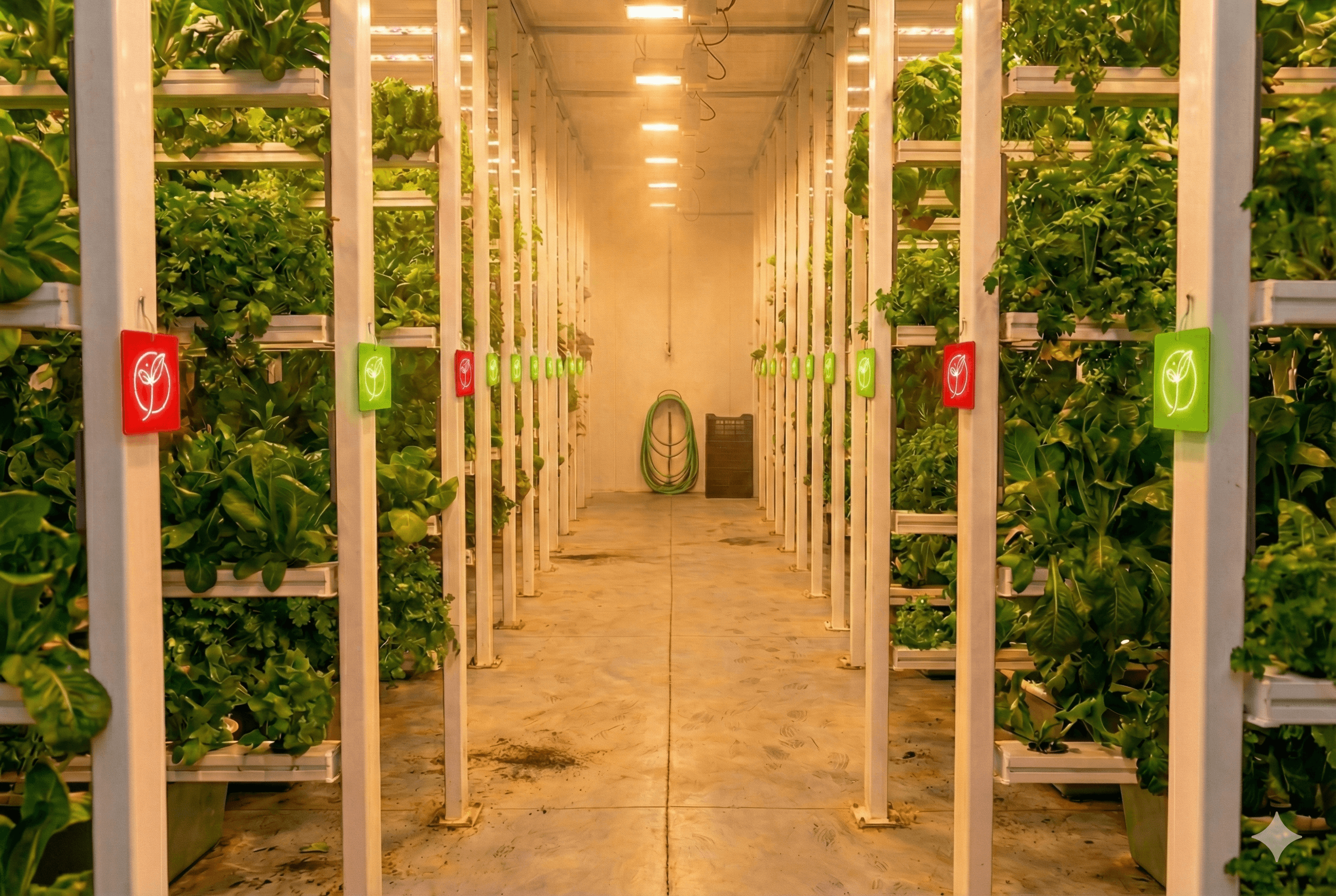
When a sensor detects elevated stress signals, it changes colour—giving growers a clear, immediate cue to investigate further. Earlier detection means more targeted intervention, fewer unnecessary treatments, and stronger biological control programmes.
Current crop protection relies heavily on reactive intervention—treating problems after they've already spread. This approach leads to:
Earlier, location-specific detection changes this equation. Growers can intervene precisely where and when needed, before problems spread across the crop. This supports:

Early detection. Smarter farming. Healthier planet.
